 English
 Español
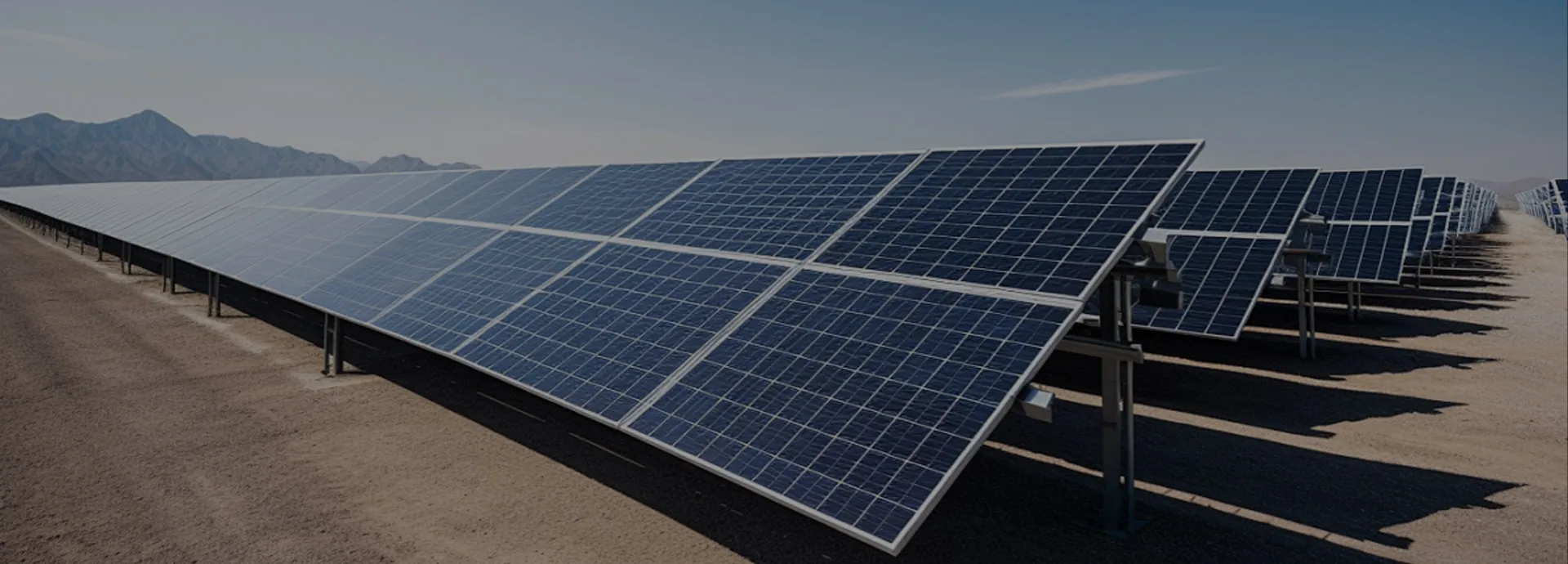
A 100MW solar farm in the desert relies on 1500V DC architecture to reduce cable losses and balance of system costs. But when a DC fault occurs on a string combiner box, the protection device must interrupt a sustained arc that has no natural zero-crossing point—unlike AC, which self-extinguishes 50 or 60 times per second. Using an AC-rated breaker in this DC environment would risk catastrophic failure.
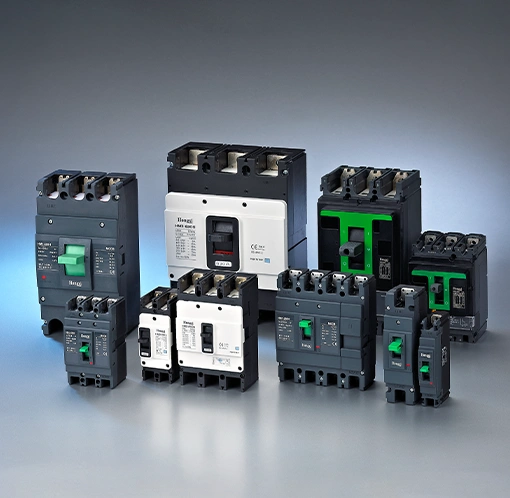
Renewable energy projects introduce unique electrical protection challenges: high DC voltages, bidirectional power flow, frequent load cycling, and harsh outdoor environments. Molded case circuit breakers (MCCBs) are emerging as the backbone of protection in these applications—but selecting the right type requires understanding the specific demands of solar, wind, and battery energy storage systems. This guide examines MCCB applications across renewable energy projects and provides practical selection considerations.
Why Renewable Energy Projects Need Specialized MCCBs
The DC Challenge
Unlike traditional AC power systems, renewable energy projects increasingly use high-voltage DC architectures. Solar farms now standardize on 1500V DC to improve efficiency and reduce balance of system costs. Battery energy storage systems (BESS) operate at similar DC voltage levels.
The fundamental challenge is DC arc extinction. Alternating current passes through a natural zero-crossing point 50 or 60 times per second, allowing arcs to self-extinguish. Direct current has no such characteristic—once a DC arc forms, it sustains itself until forced to interrupt. This requires specialized DC-rated MCCBs with robust arc-quenching structures, including magnetic blow-out mechanisms and arc chutes with splitter plates to divide and cool the arc.
Beyond AC Breaker Limitations
Standard AC breakers and miniature circuit breakers (MCBs) are designed for lower current and lower voltage circuits. Their arc-quenching strategies cannot handle sustained high-energy DC fault currents. In a 1500V DC system with hundreds of amps, these devices risk catastrophic failure or cannot interrupt the arc reliably. High-current DC MCCBs are engineered specifically for this purpose, with breaking capacities up to 20kA at 1500V DC.
MCCB Applications Across Renewable Energy Sectors
Photovoltaic (PV) Solar Power
Solar installations represent the largest and fastest-growing market for MCCBs in renewables. MCCBs are deployed at multiple points in a PV system:
| Location | Protection Function | Key MCCB Requirement |
|---|---|---|
| DC combiner boxes | String-level overcurrent and short-circuit protection | DC-rated, 1000V–1500V, gPV trip curves for PV conditions |
| Inverter DC input | Protection before DC-AC conversion | High breaking capacity, specialized trip curves |
| Inverter AC output | AC-side protection to grid or transformer | AC-rated, 800V–1000V, thermal-magnetic or electronic trip |
| AC distribution panel | Grid connection protection | IEC/UL compliance, selective coordination |
For 1500V DC solar architecture, the HM series MCCB provides protection with a DC rating of 1000V to 1500V and robust arc-extinguishing technology. The specialized gPV trip curves accommodate the current fluctuations characteristic of photovoltaic conditions, ensuring reliable protection without nuisance tripping.
Wind Power
Wind turbines generate AC power that is typically stepped up to medium voltage for transmission. MCCBs in wind applications protect both the low-voltage auxiliary systems and the AC output side of the turbine.
Key MCCB applications in wind:
-
Auxiliary power distribution inside the nacelle and tower
-
AC output protection from the turbine to the step-up transformer
-
Transformer protection at the collection point
Wind turbines present unique challenges: high vibration, extreme temperature variation, and limited access for maintenance. MCCBs for wind applications require robust construction, wide temperature ratings, and high mechanical endurance. DC MCCBs are increasingly used in modern wind turbines with DC link architectures for power conversion.
Battery Energy Storage Systems (BESS)
BESS represents one of the fastest-growing drivers of DC MCCB demand, with a projected CAGR of approximately 15.8% through 2030.
Battery banks form low-impedance energy sources. If a short circuit occurs, the resulting DC fault current rises extremely quickly and may reach tens of kiloamperes. Breakers on battery racks or DC mains must interrupt this massive fault current safely—often requiring 20kA breaking capacity or higher at 1500V DC.
Key MCCB points in BESS:
-
Battery rack protection — Each battery string requires overcurrent protection
-
DC bus protection — Main DC link between batteries and inverter
-
Inverter input protection — Bi-directional protection for charging/discharging
-
AC output protection — Grid interface protection
MCCBs in BESS applications are frequently paired with electronic trip units to provide adjustable settings, selective coordination in multi-tier rack architectures, and remote monitoring capability. Some BESS applications require bi-directional (non-polarized) protection due to charging and discharging current flow.
Emerging Applications: Charging Infrastructure and HVDC
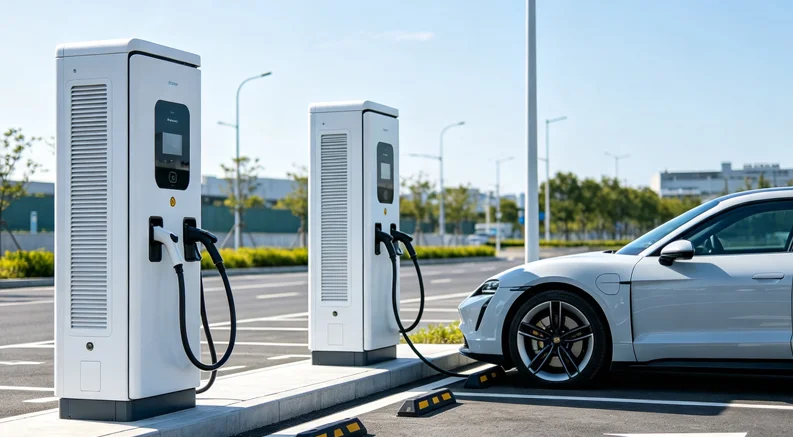
Electric vehicle charging stations — Fast DC chargers require DC MCCBs on the rectifier output to protect against short circuits and overloads. The applicable standard, T/CEC 212-2019, specifies MCCB requirements for EV charging infrastructure with voltages up to DC1500V.
High-voltage DC (HVDC) transmission — As renewable energy projects move toward long-distance HVDC transmission, MCCBs are finding applications in compact prefabricated substations and modular power units where high-voltage DC protection is required.
For detailed specifications on MCCB families designed for renewable energy applications, review the HM series molded case circuit breaker technical overview.
Key Selection Parameters for Renewable Energy MCCBs
Voltage Rating — AC vs DC
The single most critical selection factor is matching the MCCB's voltage rating to the system architecture:
-
DC-side protection (PV strings, battery racks, DC buses): Select DC-rated MCCBs with appropriate voltage rating (typically 1000V or 1500V DC). Never use AC-rated breakers for DC applications—the arc-quenching mechanism is fundamentally different.
-
AC-side protection (inverter output, grid connection, turbine output): Select AC-rated MCCBs with voltage rating matching the system (typically 690V, 800V, or 1000V AC). For solar applications with 1500V DC input, the AC output after inversion often operates at 800V AC, requiring MCCBs with insulation voltage up to 1250V.
Breaking Capacity (Icu/Ics)
The available fault current at the installation point determines the required breaking capacity. For renewable energy applications:
-
Solar DC combiner boxes: Typically 10kA–20kA at 1000–1500V DC
-
BESS battery racks: Often require 20kA or higher due to low-impedance battery sources
-
Inverter AC output: Breaking capacity must exceed the utility's available fault current at the point of common coupling
Environmental Durability
Renewable energy installations are often outdoors and in harsh environments. MCCBs deployed in these applications require:
-
Wide temperature operating range — outdoor solar and wind installations experience extreme temperature cycles
-
IP protection — dust and moisture resistance for outdoor enclosures
-
Corrosion resistance — particularly for coastal wind farms and desert solar installations
-
Vibration resistance — for wind turbine applications
Trip Unit and Adjustability
-
Thermal-magnetic trip units: Suitable for simpler applications where fixed protection settings are acceptable
-
Electronic trip units: Recommended for larger MCCBs (>250A) in complex systems requiring adjustable long-time delay, short-time delay, instantaneous trip, and selective coordination
-
gPV trip curves: Specialized curves designed for photovoltaic conditions to accommodate current fluctuations without nuisance tripping
Electric Operation and Remote Control
Increasingly, renewable energy projects require remote monitoring and control of MCCBs. Electric operation mechanisms enable remote open/close control via PLC, SCADA, BMS, or EMS systems.
For solar and BESS applications, electric operation is typically specified with:
-
DC 24V or DC 48V control voltage (compatible with battery-powered control systems)
-
RS485 communication (Modbus protocol) for integration with energy management systems
-
Auto-reclosing functionality for transient fault recovery
For applications requiring adjustable protection settings and coordination in complex renewable energy systems, explore MCCB options with electronic trip units.
Real-World Application Examples
Example 1: Utility-Scale Solar Farm (1500V DC Architecture)
-
Application: 100MW solar farm with 1500V DC system
-
DC protection: HM series DC MCCBs at combiner boxes (1000–1500V DC, 20kA Icu)
-
AC protection: AC MCCBs at inverter output (800V AC, 50kA Icu) with electronic trip units for selective coordination
-
Key consideration: Specialized gPV trip curves to handle PV current fluctuations
Example 2: Battery Energy Storage System (BESS)
-
Application: 50MW/100MWh grid-scale battery storage
-
Battery rack protection: DC MCCBs with 20kA breaking capacity at 1500V DC
-
DC bus protection: Higher frame size MCCB with electronic trip unit
-
Key consideration: Bi-directional (non-polarized) design to handle charging and discharging current
Example 3: Wind Turbine Auxiliary Systems
-
Application: 3MW wind turbine at a coastal site
-
Auxiliary distribution: AC MCCBs for tower and nacelle power distribution
-
DC link protection: DC MCCBs for converter protection
-
Key consideration: Vibration-resistant construction and corrosion protection
Next Steps — From Renewable Energy Requirements to Component Selection
You now have a practical framework for understanding MCCB applications across renewable energy projects. The key takeaways are:
-
Renewable energy requires specialized MCCBs — DC-rated for solar and storage, high-voltage AC-rated for inverter output and wind
-
DC arc extinction is the core technical challenge — DC MCCBs require dedicated arc-quenching structures not found in AC breakers
-
1500V DC architecture is the new standard for utility-scale solar and BESS
-
BESS applications demand the highest breaking capacities — up to 20kA+ due to low-impedance battery sources
-
Electronic trip units and electric operation enable remote monitoring, selective coordination, and integration with EMS/SCADA systems
-
Environmental durability is non-negotiable for outdoor solar, wind, and storage installations
Once you have determined your renewable energy project's protection requirements—DC or AC, voltage level, fault current, and environmental conditions—comparing the specific technical specifications of available MCCB families becomes the logical next step.
After establishing your renewable energy project's MCCB requirements—DC or AC voltage rating, breaking capacity, trip unit type, and environmental conditions—you can review the technical specifications of HM series MCCB for main distribution applications, or explore MCB options for smaller branch circuits where MCCBs are not required.
Related Reading
-
How to Select an MCCB Manufacturer for Industrial Projects