 English
 Español
A production line stops. The electrician opens the distribution panel and finds a miniature circuit breaker that will no longer stay closed. It has been switched on and off thousands of times over the past three years—daily starts, weekly maintenance, occasional fault interruptions. The breaker has simply worn out.
Circuit breakers are often treated as fit-and-forget components, but every operation—every manual switching, every fault interruption—erodes the internal contacts. Understanding how long an MCB can last under real-world conditions is essential for maintenance planning, spare parts inventory, and avoiding unplanned downtime.
This guide reviews the durability test standards that govern MCB endurance, presents typical test results from industry data, and explains what these numbers mean for your application.

The Standards That Define MCB Durability Testing
MCB durability is not measured arbitrarily. Two international standards define how endurance testing must be conducted and what minimum performance levels are required.
IEC 60898-1 — The Residential and Light Commercial Standard
IEC 60898-1 is the primary standard for miniature circuit breakers used in household and similar installations. It applies to MCBs with:
-
Rated voltage not exceeding 400V AC
-
Rated current up to 125A
-
Short-circuit breaking capacity from 3kA to 25kA
Under IEC 60898-1, MCBs must pass a mechanical and electrical endurance test as part of the type test suite. The standard also specifies tests for temperature rise, dielectric strength, tripping characteristics, short-circuit withstand, and resistance to mechanical shock and impact.
IEC 60947-2 — The Industrial Standard
For MCBs used in industrial applications (typically those with higher breaking capacities and more demanding duty cycles), IEC 60947-2 applies. This standard covers circuit breakers for industrial use with broader voltage and current ranges.
Key distinction: MCBs tested under IEC 60947-2 are held to more rigorous endurance requirements than those tested solely under IEC 60898-1. For this reason, many industrial-grade MCBs are certified to both standards.
A typical industrial MCB datasheet will list compliance with both IEC/EN 60898-1 and IEC/EN 60947-2, reflecting its suitability for both residential and industrial applications.
For detailed specifications on MCB families certified to both IEC 60898-1 and IEC 60947-2, review the HX series MCB technical overview.
Mechanical vs Electrical Endurance — Understanding the Two Metrics
Every MCB datasheet lists two endurance figures. They measure fundamentally different aspects of durability.
| Endurance Type | What It Measures | Test Conditions | Typical Value Range |
| Mechanical Endurance | Number of open-close operations without current | Breaker operated mechanically, no load applied | 10,000 – 20,000 cycles |
| Electrical Endurance | Number of open-close operations under load | Breaker switched at rated current, with specified ON/OFF timing | 2,000 – 10,000 cycles |
Why the difference matters: A breaker used primarily as an isolation switch (opened only when de-energized) experiences mechanical wear but no electrical wear. The same breaker used for daily load switching experiences both, but electrical endurance is almost always the limiting factor.
Industry data from leading manufacturers shows typical values:
-
Mechanical endurance: 10,000 to 20,000 operations
-
Electrical endurance: 2,000 to 10,000 operations
One manufacturer's published specification for a 63A industrial MCB lists mechanical endurance of 20,000 operations and electrical endurance of 4,000 operations. Another major brand's 80–100A series specifies electrical endurance of 10,000 operations (with a 2-second ON, 28-second OFF cycle) and mechanical endurance of 20,000 operations.
These figures are not just marketing claims. They are verified through rigorous type testing at accredited laboratories. Reputable certification bodies, including KEMA (DEKRA), Intertek (ETL), UL, VDE, and TÜV Rheinland, specialize in testing and certifying MCBs to these standards.
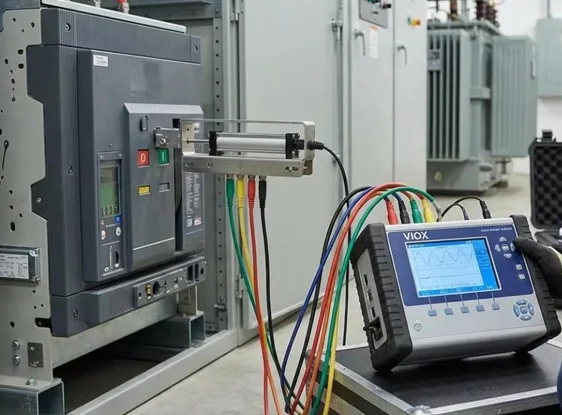
What Endurance Test Results Actually Look Like
While manufacturers publish endurance ratings, independent research provides deeper insight into how MCBs actually degrade over time.
Academic Research: Electrical Life Prediction
A 2025 study published in the journal Energies conducted electrical life experiments on three MCB samples at a test current of 63A. The study used a randomized breaking mode and applied electrical stress through repeated closing and opening operations until each sample reached end-of-life.
Key findings:
-
The predicted electrical life of sample 1 was 2,989 operations, with the simulated life at 3,009 operations (relative error of 0.7%)
-
Samples 2 and 3 showed predicted lives of 2,988, 2,975, and 2,990 operations, respectively, all close to simulated values
-
The relative errors ranged from 0.6% to 1.13%
-
At different service stages, the remaining electrical life prediction errors were less than 4%
The study also revealed the degradation pattern: after about 2,500 closing and opening operations, the reliability of the test sample began to decrease rapidly.
What This Means for Real-World Applications
An MCB with a rated electrical endurance of 4,000 operations does not simply fail at exactly 4,000 operations. Degradation is gradual. Contact erosion increases contact resistance, which generates more heat, which accelerates further erosion. The failure point depends on the specific load characteristics, switching frequency, and environmental conditions.
For a panel with 20 switching operations per day (typical for a motor control application), a 4,000-operation electrical endurance translates to approximately 200 days of service life before the breaker reaches its rated endurance—though degradation may begin earlier.
Explore Motor Protection Circuit Breakers with Different Endurance Characteristics for High-Cycle Frequent Switching Scenarios.
Factors That Affect Real-World MCB Durability
Datasheet endurance ratings are measured under standardized laboratory conditions. Real-world durability can be significantly different. Key factors include:
| Factor | Effect on Endurance | Mitigation |
| Switching frequency | Higher frequency = faster wear | Choose higher-endurance device or separate switching (contactor) from protection (MCB) |
| Load type (inductive vs. resistive) | Inductive loads cause more contact arcing and erosion | Select device with appropriate electrical endurance rating for load type |
| Fault interruptions | Each fault reduces remaining endurance significantly | Install upstream surge protection to reduce fault frequency |
| Ambient temperature | Higher temperatures accelerate contact oxidation | Derate or choose higher-rated device |
| Operating mechanism quality | Poor mechanism design causes premature mechanical failure | Choose devices from certified manufacturers with verified test results |
The academic study referenced above found that smaller arcing phase angles and higher breaking currents significantly increase the probability of arc root transfer, which accelerates contact erosion. This means that breakers protecting circuits with higher fault currents or more severe switching conditions will degrade faster than laboratory ratings suggest.
Interpreting Endurance Data — A Practical Guide for Specifiers
When reviewing MCB datasheets, here is what to look for:
1. Check Both Mechanical and Electrical Endurance
A datasheet that lists only "20,000 operations" without specifying mechanical or electrical is incomplete. Mechanical endurance is typically higher. Electrical endurance is the number that matters for load-switching applications.
2. Understand the Test Conditions
Electrical endurance is measured under specific conditions:
-
ON/OFF cycle timing (e.g., 2 seconds ON, 28 seconds OFF)
-
Test current (typically rated current)
-
Power factor (for AC testing)
If your application has a different duty cycle (e.g., longer ON time, more frequent switching), actual endurance will differ.
3. Look for Dual Certification
MCBs certified to both IEC 60898-1 and IEC 60947-2 have been tested to more comprehensive standards. The IEC 60947-2 certification typically indicates more rigorous endurance requirements.
4. Compare Across Manufacturers
| Manufacturer/Series | Mechanical Endurance | Electrical Endurance | Notes |
| Typical 63A MCB | 20,000 ops | 4,000 ops | Standard residential/light commercial |
| S200 80-100A series | 20,000 ops | 10,000 ops | Higher-endurance industrial-grade |
| Multi9 C60N series | 20,000 ops | 10,000 ops | Industrial-grade from a major brand |
| ABB S200M series | 20,000 ops | 20,000 ops (AC) / 1,500 ops (DC) | High-endurance industrial |
Real-World Application Example — Motor Control Panel
Consider a motor control panel with 10 branch circuits, each switched on and off twice per day for production shifts:
-
Switching operations per year: 2 × 365 = 730 operations
-
Standard MCB electrical endurance: 4,000 operations
-
Calculated lifespan: 4,000 ÷ 730 ≈ 5.5 years
This assumes no fault interruptions and ideal operating conditions. In practice, with occasional faults, temperature variations, and inductive motor loads, the actual service life may be 3–4 years, still acceptable for many applications.
For a high-frequency application with 20 starts per day:
-
Switching operations per year: 20 × 365 = 7,300 operations
-
Standard MCB electrical endurance: 4,000 operations
-
Calculated lifespan: 4,000 ÷ 7,300 ≈ 0.55 years (about 6.5 months)
In this scenario, a higher-endurance MCB with 10,000–20,000 electrical operations is justified to avoid frequent replacement.
Next Steps — From Endurance Data to Component Selection
You now have a framework for understanding and interpreting MCB durability test results. The key takeaways are:
-
Mechanical endurance (10,000–20,000 operations) measures switching without load
-
Electrical endurance (2,000–10,000 operations) measures switching under load and is the limiting factor for most applications
-
IEC 60898-1 governs residential MCBs; IEC 60947-2 governs industrial MCBs—dual certification indicates broader testing
-
Independent research shows electrical life typically ranges from 2,500 to 3,000 operations under test conditions, consistent with published ratings
-
Real-world durability depends on switching frequency, load type, fault history, and environmental conditions
Once you have estimated your application's annual switching frequency and identified the required endurance level, comparing the specific endurance ratings of available MCB families becomes the logical next step.
After establishing your application's endurance requirements (annual switching operations, load type, and environmental conditions), you can review mechanical and electrical ratings for HX miniature circuit breaker series— including both IEC 60898-1 and IEC 60947-2 certified models with verified test data.
Related Reading
-
Reduce Replacement Frequency with High-Endurance MCB
-
Contactor vs MCB for Motor Control Applications
-
How Ambient Temperature Affects Circuit Breaker Performance