 English
 Español
A robotic welding cell stops mid-cycle. The programmable logic controller (PLC) loses communication with the servo drives. The production display shows a fault code, but the cause is not a mechanical failure—it is a voltage sag that lasted just 80 milliseconds. By the time the power stabilizes, the entire line has been idle for 45 minutes.
In modern factory automation, electrical disturbances are not rare events—they are a constant reality. Variable frequency drives, servo motors, PLCs, sensors, and communication networks coexist on the same power distribution system, each with different sensitivity to voltage fluctuations, harmonics, and transient surges.
This guide examines the key electrical protection challenges in factory automation systems and presents practical strategies for safeguarding critical equipment.
The Changing Nature of Factory Electrical Loads
Traditional factories were dominated by large induction motors running at fixed speeds. Protection was relatively straightforward: thermal overload relays and fuses or circuit breakers sized for steady-state loads.
Today’s automated factories are fundamentally different. The electrical load profile includes:
-
Variable frequency drives (VFDs) — switching power electronics that generate harmonics and draw non-sinusoidal current
-
Servo motors and steppers — frequent starts and stops create repetitive inrush current spikes
-
PLCs, HMIs, and industrial PCs — sensitive electronics vulnerable to voltage sags and transients
-
Sensors and communication networks — low-voltage DC circuits requiring clean, stable power
-
Robotic systems — complex load patterns with high peak demands
Each of these load types presents unique protection challenges. A protection strategy designed for a motor starter panel from the 1990s will not adequately protect a modern automation cell.
Power quality issues in automated environments are often indirect—slow restarts, sudden reprogramming, or error counters that reset after a “glitch” are common warning signs. In automated environments, just a few milliseconds can put PLCs and drives into fault.
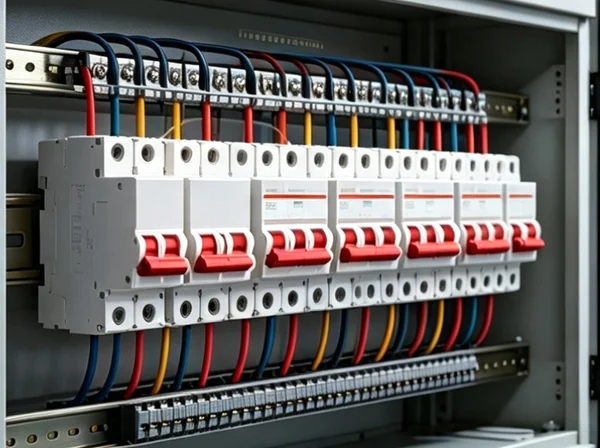
For an overview of protection components suited to modern industrial environments, review the miniature circuit breaker series covering a range of breaking capacities for different automation applications.
The Seven Key Electrical Protection Challenges in Factory Automation
Challenge 1: Short Circuits and Overcurrents
Short circuits remain the most immediate threat to factory automation equipment. Causes include cable damage from vibration or abrasion, moisture ingress in junction boxes, accidental contact during maintenance, and component failure within drives or power supplies.
The automation-specific challenge: Traditional fuses or circuit breakers are increasingly reaching their limits in complex industrial DC distributions with sensitive controls and growing numbers of subsystems. When a short circuit occurs on a 24V DC sensor bus, a conventional protection device may not trip fast enough to prevent voltage collapse across the entire PLC rack.
Protection strategy: Use circuit breakers with appropriate breaking capacity for the available fault current at each distribution level. For HX2 and HX5 series MCBs, the 10kA breaking capacity is suitable for industrial control panels and factory automation applications. For motor circuits, HGV2 series motor protection circuit breakers provide dedicated overload, phase failure, and short-circuit protection for AC systems up to 690V.
Challenge 2: Motor Starting Inrush and Overload
Motors account for a significant portion of factory automation loads. Starting a motor draws 6–8 times its running current for a brief period. A protection device that trips during this inrush causes a nuisance shutdown. One that does not trip during a sustained overload risks motor burnout.
The automation-specific challenge: In automated systems, motors start and stop frequently under program control—not just once per shift, but dozens or hundreds of times per day. Each start causes contact wear, thermal stress, and voltage sags on the distribution system.
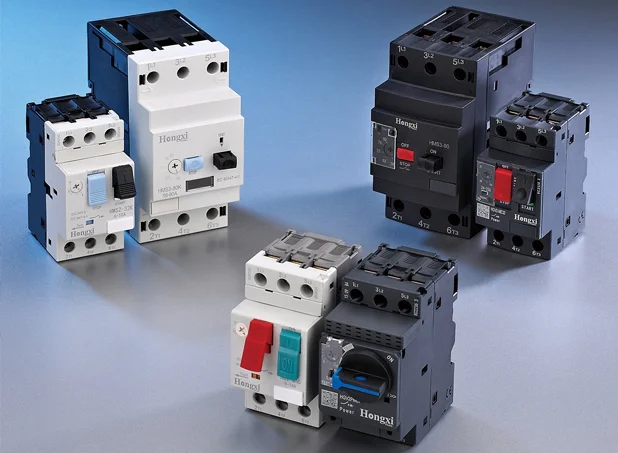
Protection strategy: For motor circuits, use dedicated motor protection circuit breakers (MPCBs) with adjustable thermal trip settings that can be matched exactly to the motor’s full load current. The HGV2 series offers adjustable current ranges from 0.1A to 63A and includes phase failure protection. For frequent starting applications, pair the MPCB with an AC contactor—the HC2 series supports rated currents from 9A to 95A and is IEC 60947-4 compliant for motor control.
Challenge 3: Voltage Sags and Dips
Voltage sags—brief reductions in voltage lasting from a few cycles to a few seconds—are one of the most common power quality problems in industrial facilities. Causes include starting large motors, faults elsewhere on the utility grid, or switching of heavy loads within the plant.
The automation-specific challenge: PLCs, drives, and industrial computers are voltage-sensitive. A sag to 70% of nominal voltage for just 2–3 cycles can cause a drive to trip or a PLC to reset. Unlike a motor that simply stalls and restarts, an automation system may require a full reboot—with all the associated production loss.
Voltage sags and voltage imbalance represent one of the biggest threats to manufacturers and industrial facilities worldwide. Electrical disturbances in energy-intensive production plants generate stress in advanced machinery, leading to wear and progressive reduction of service life.
Protection strategy: For critical automation loads, consider undervoltage protection devices that can detect sags and either ride through them or execute a controlled shutdown. The AVP series adjustable voltage protectors provide programmable overvoltage (240–300V) and undervoltage (140–210V) thresholds for single-phase systems, with adjustable startup and recovery delays.
Challenge 4: Surges and Transient Overvoltages
Industrial environments experience unique electrical challenges from transient overvoltages. Heavy motors generate transient surges when starting or stopping. Lightning strikes (even distant ones) induce surges on long cable runs. Switching of power factor correction capacitors creates high-frequency transients. Electrical surges can halt production, cause quality defects, or damage expensive automation equipment.
The automation-specific challenge: Modern automation equipment uses semiconductor components that can be damaged by overvoltages far below the levels that would affect traditional electromechanical devices. A PLC input module may fail after a single 1kV transient—well within the range of common industrial switching surges.
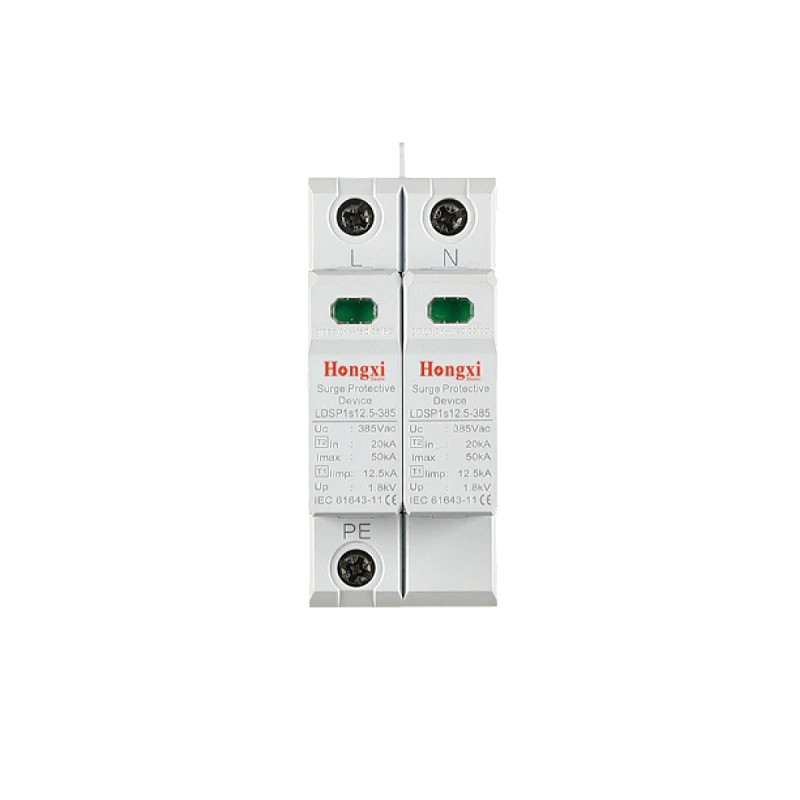
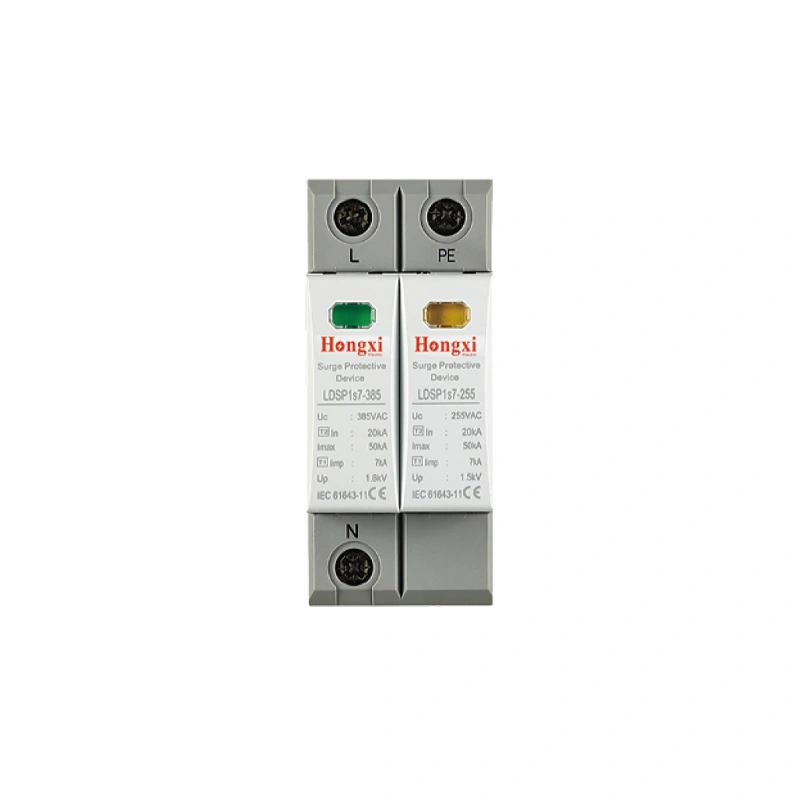
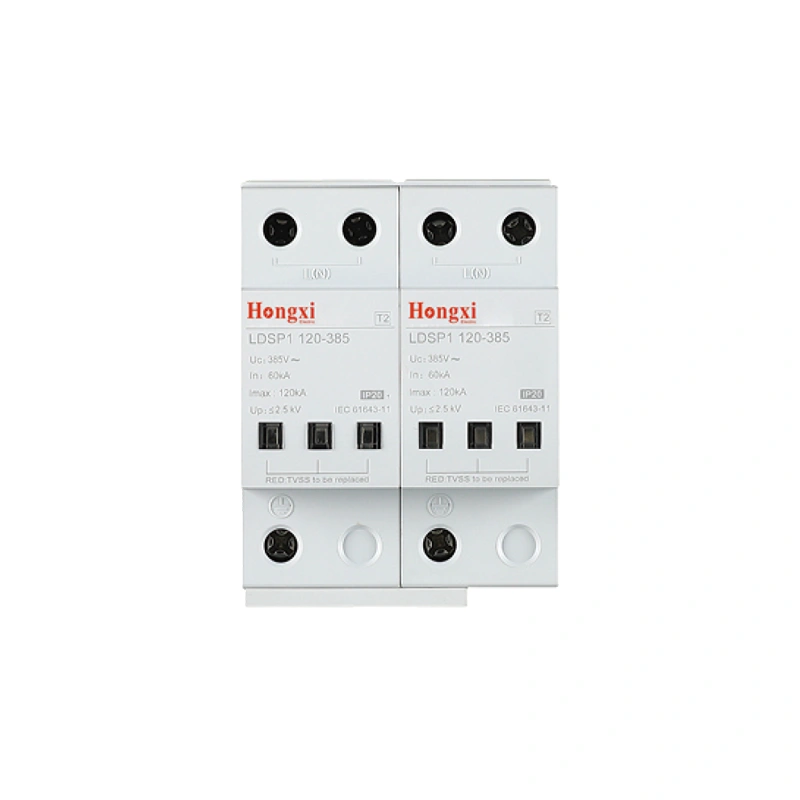
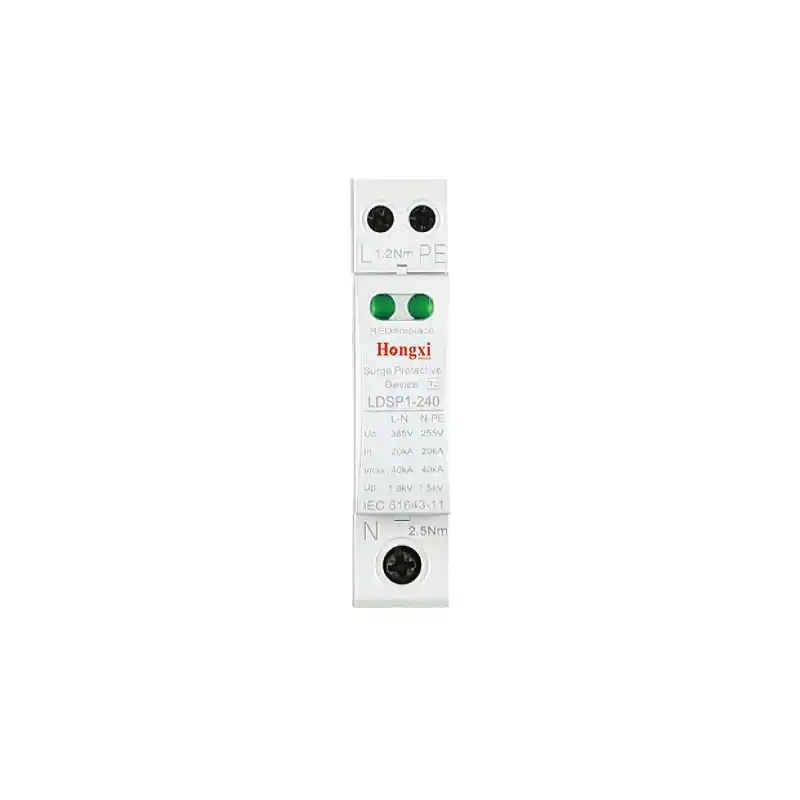
Protection strategy: Implement layered surge protection. At the main distribution panel, install Type 1+2 SPDs to handle high-energy lightning surges. At sub-distribution and at the equipment level, install Type 2 SPDs for induced surges and switching transients. The HS series offers Type 1+2 and Type 2 SPDs with impulse discharge currents from 7kA to 12.5kA and max discharge currents up to 120kA.
Challenge 5: Harmonic Distortion
Non-linear loads—VFDs, rectifiers, switched-mode power supplies—draw current in pulses rather than smooth sine waves. These pulses create harmonics that distort the voltage waveform.
The automation-specific challenge: Harmonics can cause overheating of transformers and neutral conductors, nuisance tripping of protection devices, and interference with sensitive control signals. In automated factories, the proliferation of VFDs and power supplies makes harmonic distortion a growing concern.
Harmonic disturbances significantly affect power quality, and proper switching techniques must be implemented to reduce electrical interference issues.
Protection strategy: While harmonic mitigation typically requires active filtering or harmonic trap filters, proper selection of protection devices can reduce nuisance tripping caused by harmonic currents. Choose circuit breakers with appropriate thermal-magnetic characteristics for non-linear loads.
Challenge 6: Selective Coordination
When a fault occurs on a branch circuit, the ideal outcome is that only that branch protection device trips—leaving the rest of the factory running. This is called selective coordination.
The automation-specific challenge: In automated factories with multiple levels of distribution (main panel → sub-panel → branch → equipment), achieving selective coordination is essential. A fault on a single sensor power supply should not take down an entire production line.
Protection strategy: Use devices with different trip characteristics at different distribution levels. Upstream devices should have higher current ratings or adjustable time delays. MCCBs with adjustable trip settings (available in the HM series) provide the flexibility needed for selective coordination in multi-level industrial distribution.
Challenge 7: Environmental Factors — Heat, Vibration, and Dust
Factory automation equipment often operates in harsh environments. Control panels may be located near furnaces, in unventilated enclosures, or on vibrating machinery.
The automation-specific challenge: High ambient temperatures reduce the current-carrying capacity of circuit breakers. Vibration can loosen connections and accelerate mechanical wear. Dust and moisture can cause tracking and insulation breakdown. These environmental factors can cause protection devices to trip prematurely or fail to trip when needed.
Industrial environments often include vibration, heat, dust, and continuous electrical stress.
Protection strategy: Select protection devices rated for the operating environment. For the HGV2 series, the operating temperature range is -5°C to +40°C. For higher ambient temperatures, apply derating factors and select devices with appropriate temperature compensation. For vibration-prone installations, ensure secure mounting and consider devices with robust mechanical construction.
For applications involving frequent motor starting in automated systems, motor protection circuit breakers with adjustable thermal trips provide dedicated protection against overload, phase failure, and short circuits.
A Layered Protection Strategy for Factory Automation
Effective electrical protection in factory automation requires a layered approach—not a single device or technology, but multiple layers working together.
Layer 1 — Main Distribution Protection. At the service entrance and main distribution panel, MCCBs provide high breaking capacity and selective coordination. For factory main panels, the HM1 series offers rated currents from 10A to 630A with insulation voltage up to 800V and impulse withstand voltage of 8kV, compliant with IEC 60947-1/2.
Layer 2 — Sub-Distribution Protection. At sub-panels feeding specific production areas or machine groups, MCBs with appropriate breaking capacity protect against overloads and short circuits. For industrial applications, HX2 or HX5 series with 10kA breaking capacity are recommended.
Layer 3 — Motor Circuit Protection. For individual motor circuits, dedicated MPCBs provide adjustable thermal overload protection and magnetic short-circuit protection. The HGV2 series covers 0.1A to 63A with phase failure protection.
Layer 4 — Control Circuit Protection. For PLCs, sensors, and communication networks, consider SPDs to protect against surges and transients, and voltage protectors to guard against sags and overvoltages.
Layer 5 — Equipment-Level Protection. At the individual equipment level—drives, robots, HMIs—use appropriately rated protection devices matched to the specific load characteristics.
Real-World Application Example — Automotive Assembly Line
Consider an automotive assembly line with:
-
20 servo-driven conveyor sections (each with VFD and motor)
-
8 robotic welding cells
-
40+ sensors and PLC I/O racks
-
Centralized control cabinet with PLC and HMI
Protection challenges:
-
Motor inrush from 20 conveyors starting sequentially
-
Harmonics from 20+ VFDs
-
Voltage sags when robots execute simultaneous high-power movements
-
Transient surges from welding equipment switching
Protection strategy:
-
Main distribution: 400A MCCB with electronic trip unit (HM series) for selective coordination
-
Motor branch circuits: HGV2 MPCBs set to each motor’s FLA, with HC2 contactors for switching
-
PLC and control power: AVP series voltage protector to ride through sags
-
Surge protection: HS3 Type 2 SPD at main panel; HS4 at sub-panels near sensitive equipment
Next Steps — From Challenges to Component Selection
You now have a practical framework for understanding the key electrical protection challenges in factory automation systems. The key takeaways are:
-
Modern factory automation loads are more complex than traditional industrial loads—VFDs, PLCs, and sensors require different protection strategies
-
Short circuits, motor overloads, voltage sags, surges, harmonics, coordination, and environmental factors all present unique challenges
-
A layered protection strategy is essential—no single device can address all risks
-
Match protection devices to the specific application — a motor circuit needs different protection than a PLC power supply
Once you have identified the specific protection challenges in your automation system, comparing the technical specifications of available protection devices becomes the logical next step.
After assessing your factory automation system’s protection requirements—motor loads, control circuits, surge exposure, and environmental conditions—you can review protection device options for industrial applications, explore motor protection circuit breakers, or examine surge protective devices for automation system protection.
Related Reading
-
How to Select an MCCB Manufacturer for Industrial Projects
-
Contactor vs MCB for Motor Control Applications
-
How Ambient Temperature Affects Circuit Breaker Performance