 English
 Español
You've heard about remote-controlled MCBs—smart circuit breakers you can switch on and off from your phone, schedule to match time-of-use tariffs, and monitor in real time. But the question that stops most facility managers and business owners from making the switch is simple: Does it actually pay off?
The short answer is yes—for many facilities, the payback period ranges from under 12 months to around 2 years. But the longer answer depends on your specific facility, electricity rates, and how you use the technology.
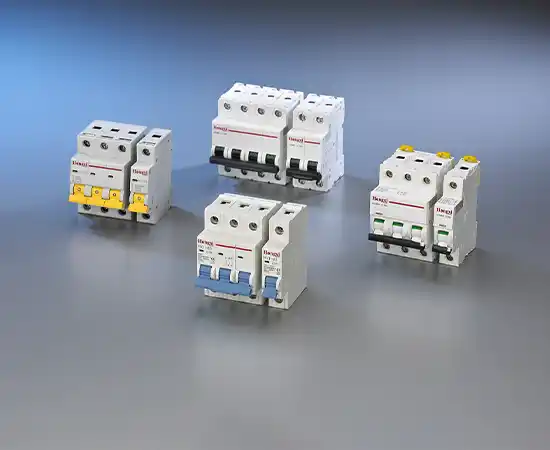
This guide walks you through a practical ROI calculation framework so you can estimate whether upgrading to remote-controlled MCBs makes financial sense for your operation—before you spend a dollar. To understand the baseline performance of conventional circuit protection, explore the Miniature Circuit Breaker series for a reference point on standard breaking capacities and trip characteristics.
What Goes Into the ROI of a Remote-Controlled MCB Upgrade?
ROI isn't just about energy savings. A complete picture includes four distinct benefit categories:
| Benefit Category | What It Means | Typical Impact Range |
|---|---|---|
| Energy Savings | Reduced consumption through scheduling, load shedding, and behavioral change | 10–30% of electricity bills |
| Maintenance Cost Reduction | Fewer site visits, remote diagnostics, predictive alerts | 30–40% of maintenance costs |
| Downtime Avoidance | Faster fault response, reduced unplanned outages | 45% reduction in unplanned downtime |
| Operational Efficiency | Eliminated manual meter reading, automated reporting | Varies by facility size |
On the cost side, you'll need to account for:
-
Hardware cost (remote-controlled MCBs + any gateway/communication module)
-
Installation labor (retrofit vs. new installation)
-
Software/platform subscription (if applicable)
-
Training (minimal for most app-based systems)
A 2023 study published in IEEE Xplore examined the optimal allocation of remote-controlled switches and circuit breakers in distribution systems, noting that while capital costs are a consideration, the financial benefits from improved service reliability and reduced interruption costs must be factored into the investment decision.
Step-by-Step: How to Calculate Your Own ROI
Here's a practical five-step framework you can apply to your facility:
Step 1: Calculate your annual electricity bill by circuit (or by load type)
If you don't already have circuit-level data, start with your total annual bill and estimate which percentage is attributable to controllable loads—lighting, HVAC, office equipment, non-critical production lines. For a typical commercial building, controllable loads often represent 40–60% of total consumption.
Why this matters: Remote-controlled MCBs only save energy on circuits you can actually switch on and off or schedule. Always-on critical equipment (servers, medical devices, 24/7 production) won't contribute to energy savings.
Step 2: Estimate your achievable energy savings
Based on documented case studies and industry data, here's what you can reasonably expect:
| Application Type | Typical Energy Savings | Source |
|---|---|---|
| Commercial buildings with automated load management | Up to 20% | ABB InSite system data |
| Industrial facilities with energy transparency | Up to 30% | ABB factory case studies |
| Facilities with time-of-use scheduling | 10–20% | Industry analysis |
| Residential with smart scheduling | 10–20% | Multiple sources |
For a real-world reference: A 145,000 sq. ft corporate headquarters that digitized over 40 electrical panels achieved a 26% reduction in total electricity use and a 17% drop in peak demand—resulting in $64,030 in annual energy cost savings.
Step 3: Quantify maintenance savings
Remote-controlled MCBs with built-in energy metering eliminate manual meter reading rounds and enable remote diagnostics. Industrial and commercial facilities deploying smart circuit breakers with IoT monitoring report 30% lower maintenance costs.
For your calculation:
-
Estimate current annual maintenance cost (labor for meter reading, fault diagnosis, site visits)
-
Apply a 30–40% reduction factor
Step 4: Factor in downtime reduction
Every hour of unplanned electrical downtime has a cost—lost production, idle labor, missed shipments. Smart breakers with remote control and fault alerts reduce average fault response time dramatically. In one documented case, response time dropped from 45 minutes to 6 minutes.
For your calculation:
-
Estimate the cost of one hour of unplanned downtime
-
Multiply by the expected reduction in downtime hours per year
-
Industry data suggests a 45% reduction in unplanned electrical downtime
Step 5: Calculate total annual savings and payback period
With all four benefit categories quantified, the formula is simple:
Total Annual Savings = Energy Savings + Maintenance Savings + Downtime Avoidance Savings + Operational Efficiency Savings
Payback Period (months) = (Total Hardware + Installation Cost) ÷ (Total Annual Savings ÷ 12)
ROI (%) = (Total Annual Savings × Payback Period in Years) ÷ Total Investment × 100
Real-World Payback Examples
Example 1: Vietnam Industrial Textile Plant
A 280-employee textile factory in Vietnam with an annual electricity bill of approximately $485,000 installed 42 smart WiFi breakers across its distribution board. The results after three months of operation:
-
28% reduction in peak energy costs
-
40% reduction in on-site maintenance work
-
Total investment: $78,200
-
Payback period: 6.9 months
Example 2: Large Corporate Headquarters (145,000 sq. ft)
A facility that digitized over 40 electrical panels achieved:
-
26% reduction in total electricity use
-
17% drop in peak demand
-
$64,030 annual energy cost reduction
-
349 metric tons of CO₂ emissions avoided annually
Example 3: ABB Smart Breaker Installation
According to ABB case study data, smart circuit breaker upgrades can deliver:
-
Up to 20% savings on energy bills
-
40% savings on maintenance costs
-
30% savings on operational costs
A 2025 industry analysis of 120 assembly plants found that smart breakers with I²t monitoring reduced unplanned test-cell downtime by 41% compared to conventional thermal-magnetic devices, with ROI payback periods of 8–14 months.
When Does the ROI Make the Most Sense?
Not every facility will see the same payback. The upgrade is most compelling when:
Your facility has significant controllable loads
Lighting, HVAC, office equipment, and non-critical production lines offer the greatest scheduling opportunities.
You pay time-of-use electricity tariffs
Automated scheduling to shift loads away from peak-rate periods delivers direct bill savings.
You have multiple distributed sites
Remote monitoring eliminates the need for site visits to check breaker status or reset tripped circuits.
You're already planning a panel upgrade
Retrofitting smart breakers during planned electrical work adds minimal incremental cost. Industry data shows retrofitting can be accomplished at 30–50% of the cost of a full panel replacement while delivering 80–90% of the benefits.
You experience frequent nuisance trips or outages
Faster fault response and remote reset capability mean less downtime and fewer service calls.
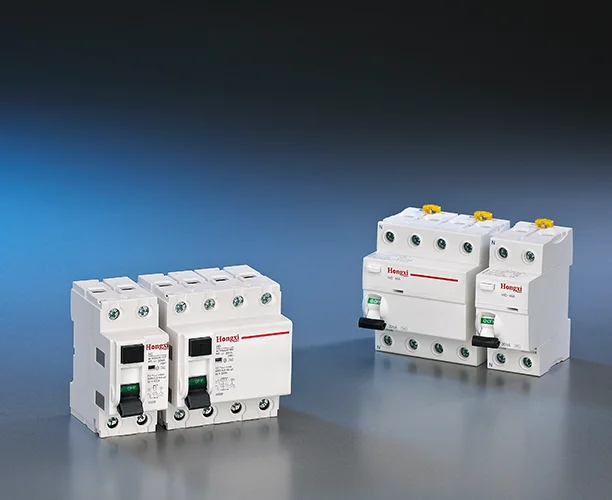
For industrial and commercial applications where comprehensive protection extends beyond overcurrent to include earth leakage, the Residual Current Circuit Breaker series provides additional safety layers for personnel and equipment protection—an important complement to any smart MCB upgrade strategy.
Next Steps — From Calculation to Implementation
Once you've run the numbers for your specific facility, the decision becomes clear: Does the payback period align with your capital expenditure horizon? For most commercial and industrial facilities, the answer is yes—with payback periods typically falling between 7 and 18 months.
The next logical step is comparing the specific specifications of available options. For facilities prioritizing seamless integration with existing panel layouts and remote monitoring capabilities, Hongxi Electric's HC1 and HC2 contactors and complementary protection devices offer flexible configurations for both new installations and retrofit projects. For applications requiring per-circuit energy metering and scheduling, exploring the HX1, HX2, HX3, and HX5 miniature circuit breakers portfolio provides a foundation for understanding how different form factors and communication protocols align with your specific ROI model.
For facilities with motor-heavy loads—such as pumps, compressors, and conveyor systems—understanding the specific protection requirements of motor circuits is essential to an accurate ROI calculation. The Motor Protection Circuit Breaker series offers dedicated overload, phase failure, and short-circuit protection for AC systems up to 690V, addressing the unique inrush and thermal challenges that standard MCBs may not fully cover.
Related Reading
-
Electrical Protection Challenges in Factory Automation Systems
-
Smart Circuit Breaker Selection Guide: Features Comparison
-
Energy Monitoring and Load Management Best Practices