 English
 Español
In Johannesburg last year, a newly renovated retail complex lost its entire electrical infrastructure two months after opening. The cause? Not an overload. Not a short circuit. A miniature circuit breaker that failed to trip when it should have. The result: overheated wiring, insulation ignition, and R2.4 million in damages.
According to the Fire Protection Association of Southern Africa (FPASA), electrical faults account for nearly 30% of structural fires in commercial buildings. And within that category, thermal events originating from failed or non-compliant overcurrent protection devices rank among the top three preventable causes.
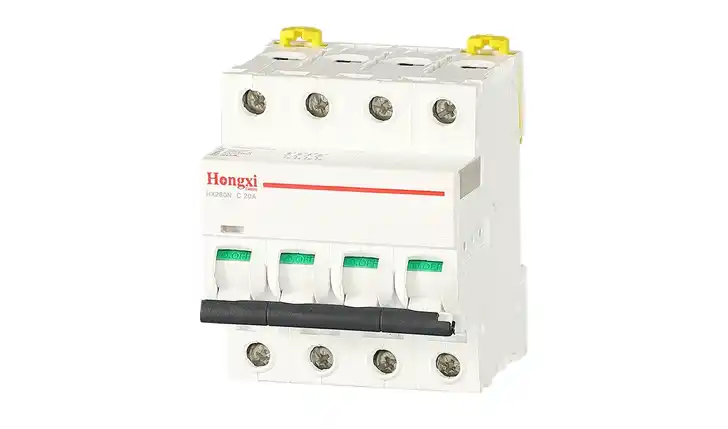
The gap between a safe installation and a hazardous one often comes down to a single question: Does the protection device actually do what it claims?
The Hidden Risk in Your Panel
Most facility managers assume that if a breaker carries a certification mark, it will perform to standard. That assumption carries risk.
South Africa's national wiring code, SANS 10142-1, explicitly requires that all circuit breakers used in electrical installations comply with the relevant product standard. For miniature circuit breakers, that means SANS 60947-2 (industrial) or SANS 60898-1 (household and similar installations). These standards define critical performance parameters:
-
Thermal trip accuracy (must operate within specified time-current curves)
-
Magnetic trip thresholds (instantaneous operation for short circuits)
-
Breaking capacity (ability to interrupt fault current without welding contacts)
-
Endurance (number of mechanical and electrical operations)
A device that passes these tests behaves predictably under fault conditions. A non-compliant device—even one that looks identical from the outside—may fail catastrophically.
Why Non-Compliant Breakers End Up in Commercial Panels
Three common channels introduce non-compliant devices into otherwise well-specified projects:
Channel 1 – Unverified substitutions during procurement
A contractor quoted certified breakers. The purchasing team found a lower price online. The products arrived in similar packaging, with similar markings. But the internal bimetal and arc extinguishing chamber did not meet spec. When a fault occurred, the contacts welded shut instead of opening.
Channel 2 – Grey market imports with counterfeit labels
International testing bodies estimate that counterfeit electrical products account for 5-7% of the low-voltage protection market in developing economies. These products carry forged certification marks but fail basic calibration tests.
Channel 3 – Old stock from deregulated markets
Some breakers sold as "compatible alternatives" were manufactured before the current SANS edition took effect. They may have met an older revision but lack updated safety requirements introduced in the latest code cycles.
The True Cost of a Single Fault
A facility manager in Durban shared this calculation after replacing the main distribution board in a three-story office building:
| Cost Category | Amount (ZAR) |
|---|---|
| Board replacement + labour | 87,000 |
| Business interruption (5 days) | 210,000 |
| Electrical compliance re-certification | 18,500 |
| Legal fees (tenant claim) | 95,000 |
| Total direct cost | 410,500 |
The failed breaker that triggered the event cost R89. The savings on the initial purchase? R372 per unit across 24 breakers—less than R9,000.
Note: Costs are illustrative based on industry-reported averages. Actual expenses vary by region and building scale.
How to Verify Compliant Protection: A Practical Framework
Step 1 – Read the labeling, not just the price
Every legitimate breaker intended for the South African market displays:
-
The manufacturer's name or registered trademark
-
The standard designation (SANS 60947-2 or SANS 60898-1)
-
Rated voltage and current
-
Breaking capacity (kA)
-
Trip characteristic (B, C, or D)
-
A traceable batch or date code
If any of these are missing or illegible, do not install the device.
Step 2 – Request supporting documentation from your supplier
Reputable distributors provide:
-
Test reports from accredited laboratories (SANAS-accredited or equivalent)
-
Certificate of compliance (CoC) for the product batch
-
Declarations of conformity from the manufacturer
Step 3 – Perform simple field checks
While full calibration requires laboratory equipment, two quick checks catch obvious non-compliance:
-
Visual inspection of the contact carrier (through the terminal opening on some models)—genuine devices show clean, aligned components
-
Thermal imaging under 80% rated load after installation—excessive hot spots may indicate poor internal contact design
Step 4 – Audit existing panels for suspect devices
If you manage an older building or one with an unknown maintenance history, schedule a panel audit. Look specifically for:
-
Breakers with mismatched brands across a single panel
-
Devices with smeared or sticker-based labels (rather than molded or laser-etched)
-
Units lacking any visible standard designation
Regulatory Context: What SANS 10142-1 Requires
Clause 6.8.3 of SANS 10142-1 (Edition 3, as amended) states that overcurrent protection devices must be selected and installed to provide protection against overload and short circuit. More critically for specifiers, Clause 5.4 requires that all equipment bearing a certification mark must be authentically certified—putting legal responsibility on the installer and property owner.
In practice, this means:
-
You cannot delegate liability to a supplier who provided uncertified goods
-
Insurance claims following a fire may be denied if non-compliant protection is discovered post-incident
-
Municipal inspectors have the authority to reject installations containing unmarked or non-compliant breakers
When Building or Retrofitting a Panel
For electrical contractors and panel builders, the specification decision happens at the design stage—long before a breaker is clipped onto a DIN rail. This is the most cost-effective time to ensure compliance.
A documented specification should include:
-
The exact product standard (e.g., "MCBs shall comply with SANS 60947-2, breaking capacity minimum 6kA")
-
Requirement for traceable batch documentation
-
Rejection criteria for unmarked or substitution products
-
A reference to approved sources or pre-qualified suppliers
Engineering firms seeking to standardize their MCB specifications across projects can access detailed compliance and configuration references to support procurement and quality assurance documentation.
The Bottom Line for Facility and Safety Managers
Electrical fires caused by failed protection devices are preventable. The chain of prevention starts with specification, continues through verification at delivery, and ends with periodic panel audits.
A breaker that never faces a fault may last decades regardless of quality. The problem is that faults are not scheduled. When one arrives—a motor stall, a phase-to-phase short, a deteriorated cable—the breaker must operate correctly in milliseconds. Non-compliant devices fail that test.
When was the last time someone verified the protection devices in your main distribution panels? If the answer is unclear, that is not a criticism of your team. It is a common gap in buildings of all ages. But it is also a gap worth closing before the next fault arrives.